
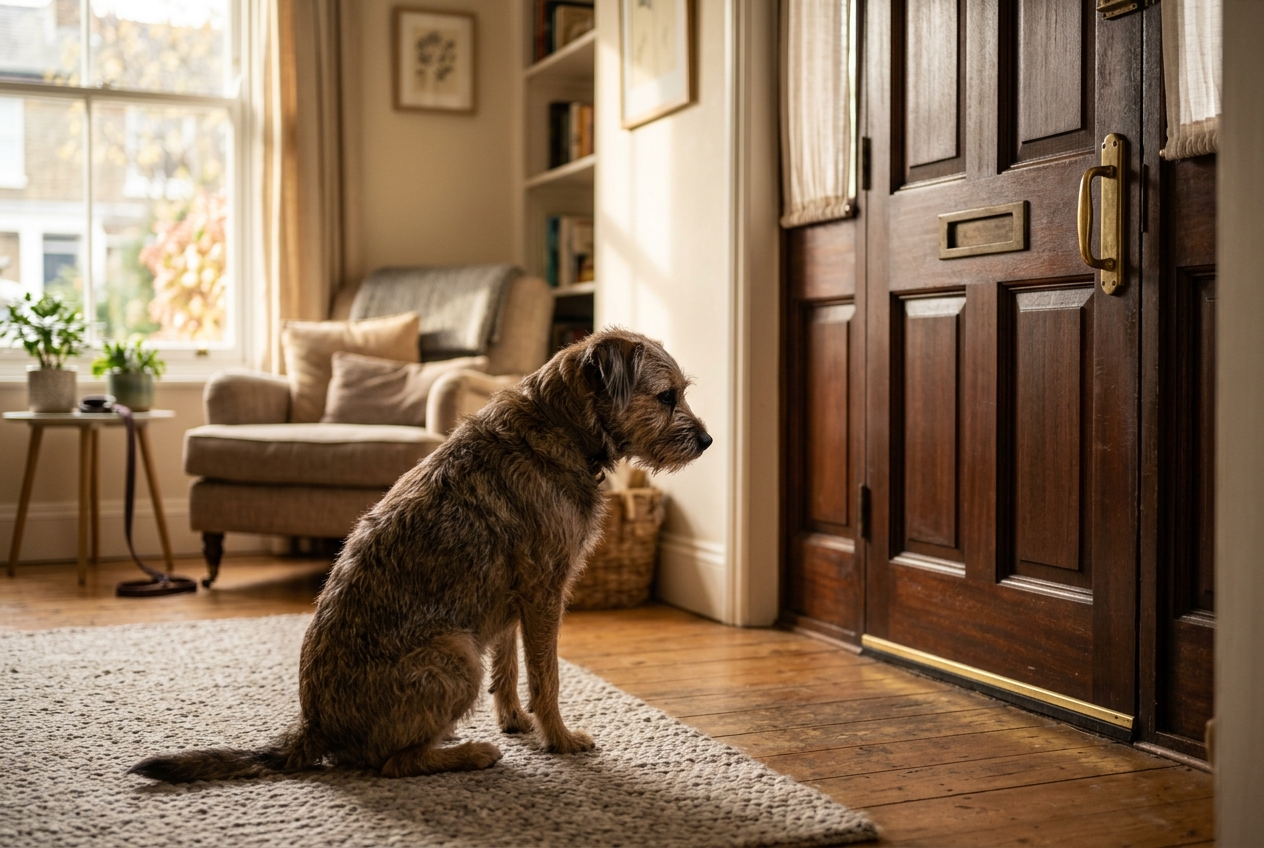
Understanding Pet Separation Anxiety: Decoding Your Dog's Silent Stress Signals

⚡ TL;DR – Quick Safety Summary
- •Separation anxiety is a panic response, not spiteful behavior
- •Destruction near exits, vocalization, and house soiling are common signs
- •Pre-departure cues (like picking up keys) can trigger early distress
- •Gradual desensitization and counter-conditioning are key to recovery
Leaving our pets home alone is rarely easy, but for some dogs, it triggers a state of sheer panic. When you walk out the front door, does your dog settle down for a nap, or does their heart rate spike as they enter a full-blown anxiety attack?
Separation anxiety is one of the most common psychological challenges pets face. Understanding that this is a panic response—akin to a human panic attack—rather than malicious behavior is the first step toward helping your pet.
What is Separation Anxiety?
Separation anxiety occurs when a dog exhibits distress and behavioral problems when separated from their primary handlers. Unlike minor boredom, which might lead a dog to chew a shoe left on the floor, true separation anxiety is a severe distress response that begins almost immediately after you leave.
Common Signs and Symptoms
Separation anxiety can manifest in several ways, some obvious and others quiet.
🚪 Exit-Point Destruction
Anxious dogs will often claw, dig, or chew at doorways, window frames, and barriers in a frantic attempt to reunite with their owners. This can result in self-injury, such as broken nails or cut paws.
🔊 Persistent Vocalization
Whining, howling, and barking that starts shortly after departure and continues for hours is a hallmark sign. This vocalization is distinct from brief barking at a passing mail carrier.
💧 Sudden House Soiling
A house-trained dog that urinates or defecates inside only when left alone may be experiencing separation anxiety. The distress causes them to lose control of their bladder or bowels.
⏱ Pre-Departure Panic
Many dogs begin panicking before you even leave. They recognize "pre-departure cues"—like putting on shoes, picking up keys, or packing a bag—and may pant, pace, drool, or follow you closely from room to room.
Why Does It Happen?
While any dog can develop separation anxiety, certain triggers make it more likely:
- Change in Routine: A sudden return to office work after a long period of working from home.
- Change in Household: Moving to a new home, or losing a family member or another pet.
- Shelter History: Dogs adopted from shelters sometimes have a higher propensity for separation distress due to past abandonment.
How to Help Your Anxious Pet
Overcoming separation anxiety requires patience and a systematic approach.
- Desensitize Pre-Departure Cues: Pick up your keys, put on your coat, and then sit on the couch. Do this repeatedly until your dog no longer associates these actions with your departure.
- Practice Short Absences: Start by stepping outside for just 10 seconds, then return before your dog panics. Slowly build up the duration over weeks.
- Provide High-Value Distractions: Give your dog a puzzle toy stuffed with frozen peanut butter only when you leave, and remove it as soon as you return.
- Avoid Emotional Departures and Greetings: Keep exits and entries calm and low-key to signal that coming and going is not a big deal.
When to Seek Professional Help
If your dog is injuring themselves, destroying your home, or showing signs of extreme distress that do not improve with basic training, consult a veterinarian or a certified veterinary behaviorist. In severe cases, temporary anti-anxiety medication combined with behavior modification is the most humane and effective path to recovery.
Sponsored Placement