
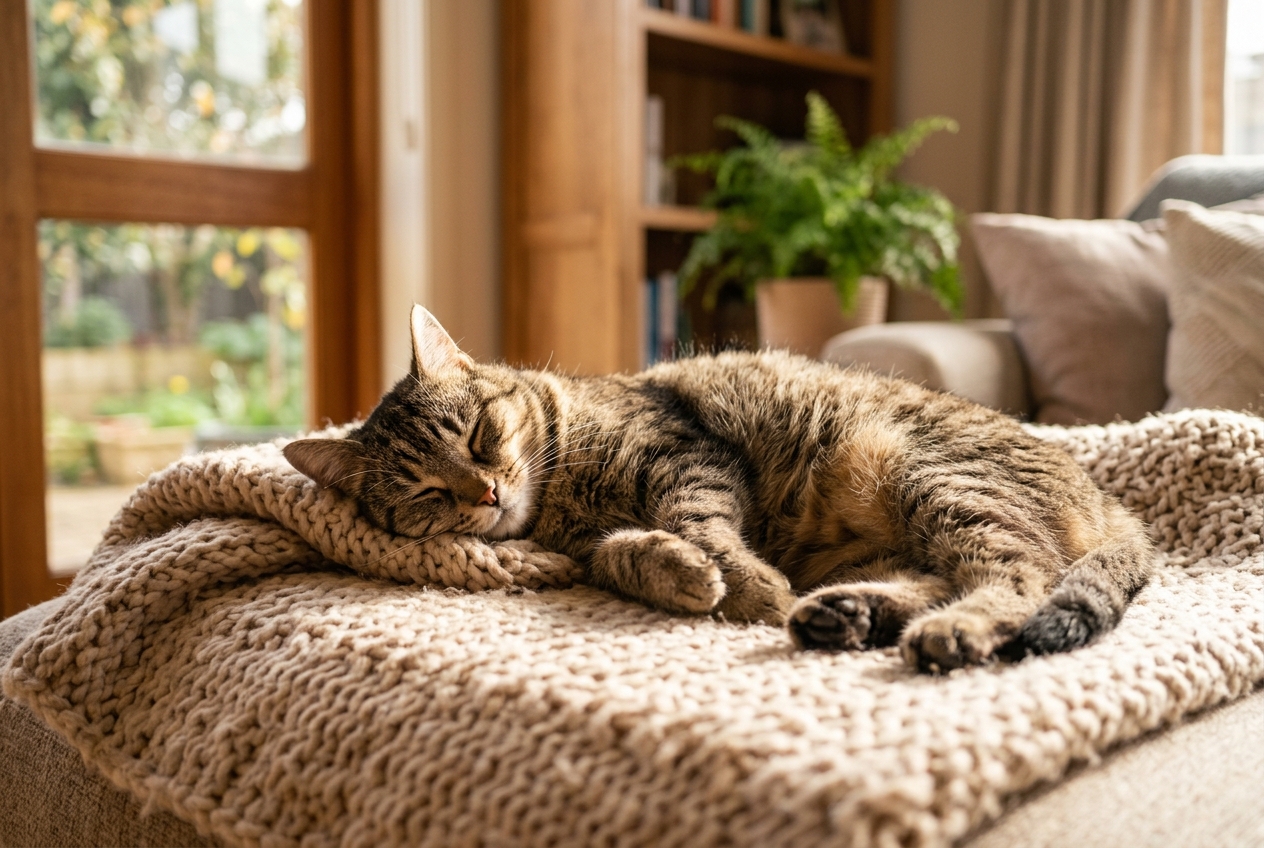
The Science of the Purr: Decoding Feline Emotional Psychology

⚡ TL;DR – Quick Safety Summary
- •Cats purr using their larynx and diaphragm muscles at a frequency of 25–150 Hz
- •Purring is not just a sign of happiness; cats also purr to self-soothe when stressed or hurt
- •The low-frequency vibrations of a purr can promote bone density and tissue repair
- •Purring serves as an early bonding tool between mother cats and their kittens
There is few sounds in the natural world as comforting as the soft, steady rumble of a purring cat curled up in your lap. For centuries, we’ve associated this sound with feline bliss—the ultimate sign of a content and happy pet.
But feline behaviorists and veterinarians have discovered that the psychology of the purr is far more complex than simple happiness. Cats purr in a variety of situations, including when they are frightened, sick, or injured.
So, what is the science and psychology behind this mysterious rumble?
How Do Cats Purr?
Cats do not have a special organ for purring. Instead, the sound is produced by a rapid, rhythmic contraction of the muscles in their larynx (voice box) and diaphragm.
As the cat breathes in and out, air hits the vibrating muscles, creating the characteristic rumble. This process is controlled by a neural oscillator in the cat's brain and occurs at a steady frequency between 25 and 150 Hertz.
The Many Meanings of a Purr
While contentment is the most common reason, cats use purring as a multi-purpose tool for survival and communication.
1. Feline Self-Soothing
Just as humans might laugh nervously or pace when stressed, cats purr to calm themselves down. You may notice a cat purring loudly during a vet visit, during a thunderstorm, or when they are in pain. The physical act of purring releases endorphins in the brain, helping to reduce pain and soothe anxiety.
2. A Low-Frequency Healing Mechanism
One of the most remarkable discoveries in feline biology is that the frequency of a cat's purr (specifically between 20 and 50 Hz) falls within the range known to improve bone density, repair tendons, ease breathing, and reduce pain.
This suggests that purring may function as a low-energy self-repair system. It helps cats keep their bones and tissues healthy even during long periods of rest and sleep.
3. Early Maternal Bonding
Kittens are born blind and deaf, but they can feel vibrations. A mother cat will purr while giving birth and nursing to act as a homing beacon, helping her kittens find her. Kittens begin purring when they are just a few days old to signal to their mother where they are and that they are getting milk.
4. Solicitation (The "Feed Me" Purr)
Cats have developed a highly specialized purr called the solicitation purr used specifically when they want food from their owners. Researchers found that this purr contains a high-frequency cry—similar in frequency to a human baby’s cry—embedded within the low-pitched rumble. Humans find this sound incredibly difficult to ignore, prompting us to fill the food bowl immediately.
The Takeaway
The next time your cat purrs, take a moment to look at their body language. If their ears are relaxed, eyes half-closed, and body loose, it is a purr of pure happiness. But if they are tense, hunched, or seeking hiding spots, remember that their purr is their built-in mechanism for comfort and healing.
Sponsored Placement