Decoding the Bowl: How to Read and Understand a Pet Food Label

⚡ TL;DR – Quick Safety Summary
- •Ingredients are listed by weight, but water content can skew the order
- •Look for named protein sources (like 'chicken') instead of generic 'meat'
- •The 'Guaranteed Analysis' lists minimum percentages of protein and fat
- •Ignore unregulated marketing buzzwords like 'holistic' or 'human-grade'
Strolling down the pet food aisle is an exercise in visual marketing. Bags are decorated with pictures of fresh-cut chicken breasts, glowing sweet potatoes, and wolves running through forests. Bold labels declare the food is "holistic," "premium," and "natural."
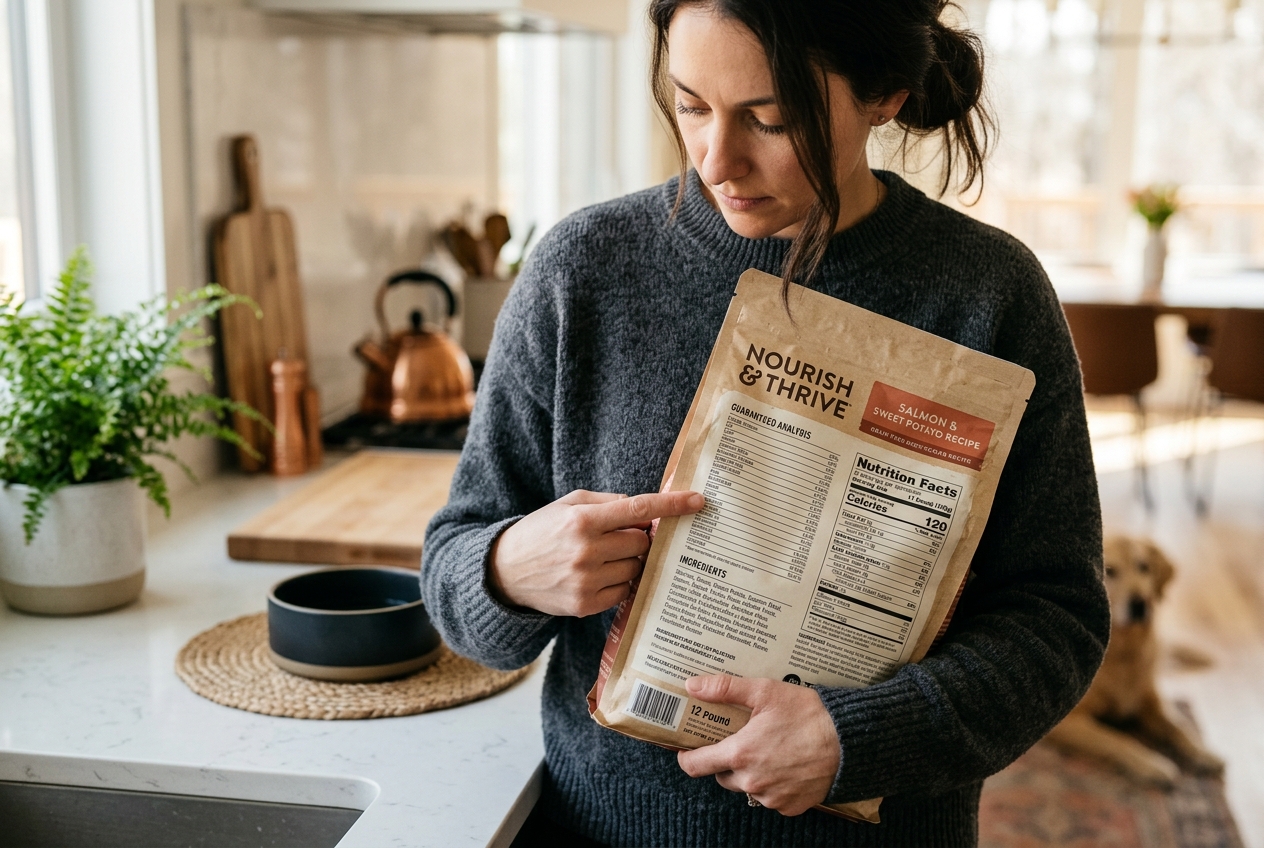
But packaging can be highly misleading. The only way to know what is actually going into your pet's bowl is to turn the bag around and read the label.
Here is how to decode a pet food label like a pro.
1. The Ingredient List: Quality vs. Weight
In the United States, pet food ingredients must be listed in descending order by weight before processing.
The Water Trap
If "Chicken" is the first ingredient, it sounds like a high-protein food. However, whole chicken is about 70% water. During processing, that water is cooked away, meaning the actual amount of chicken meat left in the kibble is much smaller. If the second ingredient is "Corn Gluten Meal" (which is dry), your pet may actually be eating more corn protein than chicken protein.
- Tip: Look for named meat meals (like "Chicken Meal") in the top ingredients. Meat meals are dehydrated meats, containing concentrated protein with the water already removed.
Named vs. Generic Ingredients
Look for specific, named ingredients rather than generic ones.
- Good: "Chicken," "Beef," "Salmon," "Chicken Fat."
- Avoid: "Meat By-Products," "Animal Fat," "Poultry Meal." Generic terms can indicate low-quality ingredients from unspecified animal sources.
2. The Guaranteed Analysis (GA)
The Guaranteed Analysis is a chart that lists the minimum percentages of crude protein and crude fat, and the maximum percentages of crude fiber and moisture.
- Crude Protein (Min): The minimum amount of protein in the food.
- Crude Fat (Min): The minimum amount of fat, which provides energy and healthy oils.
- Crude Fiber (Max): The maximum amount of indigestible fiber, which helps with digestion.
Note: GA percentages are based on "as-fed" weight, which includes water. If you want to compare wet food to dry food, you must convert the values to a "Dry Matter" basis.
3. The AAFCO Statement: The Golden Standard
Somewhere on the back or side of the bag, you should find a small block of text containing the words "AAFCO statement." The Association of American Feed Control Officials (AAFCO) defines the nutritional standards for pet foods.
The statement will tell you two things:
- If the food is complete and balanced: Meaning it contains all the vitamins and minerals your pet needs.
- The life stage it is designed for: "Adult Maintenance" (for grown pets), "Growth and Reproduction" (for puppies/kittens and pregnant mothers), or "All Life Stages" (which is formulated to support growth, meaning it is often higher in calories and fat).
If a bag does not have an AAFCO statement, or says "intended for intermittent or supplemental feeding only," it is not a complete meal and should only be fed as a treat.
4. Ignore the Buzzwords
Many common pet food claims are purely for marketing and are not legally defined or regulated:
- "Human-Grade": While it sounds premium, there is no official definition of this term on a finished bag of pet food.
- "Premium" / "Super-Premium": These are purely advertising claims. A "premium" food is not legally required to contain better ingredients than a budget food.
- "Holistic": This word has no legal meaning in pet feed regulation.
The Takeaway
Don't let the front of the bag make the decision for you. Spend two minutes reading the ingredient list, checking for specific meat sources, and verifying the AAFCO statement. Your pet’s long-term health and vitality will thank you for it.
Sponsored Placement